Tuesday, November 9, 2021

New NY Law Prohibits E-Cigarettes at Schools

New York law bans the use of electronic cigarettes at school, including at all public and private schools and in vehicles used to transport students. 

You may have heard various terms to describe electronic nicotine delivery systems, such as electronic cigarettes, e-cigarettes, e-cigs, vapes, vaporizers, or vape pens. No matter what you call them, youth e cigarette use is dangerous.

The use of e-cigarettes has become increasingly popular, particularly among young people and high school students. Over a recent five-year span, e-cigarette use for high school students jumped from 10.5 percent to 27.4 percent, according to a report by the New York Department of Health, representing a staggering increase of 160 percent. Meanwhile, the rate of smoking regular cigarettes for high school students fell from 27.1 percent to 4.3 percent. Presently, e-cigarettes, also known as “e-cigs,” are the most commonly used cigarette product.

Tobacco use is the leading cause of preventable disease and death in the United States, according to the Centers for Disease Control and Prevention (CDC) . Almost all tobacco produce use begins during youth and young adulthood. Each year, the National Youth Tobacco Survey is administered to help determine the frequency of use. According to the most recent National Youth Tobacco Survey, 4.47 million students or 16.2 percent of all students reported tobacco product use within the last 30 days. This included 23.6 percent of high school students and 6.7 percent of middle school students. E cigarettes were the most commonly used tobacco product among middle and high school students. 

Dangers of E Cigarettes

E-cigarettes contain a battery, a heating element and a place to hold liquid that typically contains nicotine. The e-cigarette device heats the liquid until it vaporizes, and the user inhales the vapor into their lungs. While some think that “vaping” is safer than smoking traditional tobacco cigarettes, the fact is that nicotine exposure of any kind can harm adolescent brain development and lead to nicotine addiction.

Additionally, the American Lung Association reports that e-cigarettes contain a variety of harmful substances that can be dangerous when inhaled, potentially leading to irreversible lung damage and lung disease. These potentially harmful ingredients include propylene glycol and vegetable glycerin, which are toxic to cells. The more ingredients in e-liquid, the greater the toxicity level. The American Lung Association reports that e-cigarettes produce various dangerous chemicals, including acetaldehyde, acrolein, and formaldehyde, which can cause serious lung disease. The Surgeon General has also reported that when people use e-cigarettes, they produce secondhand emissions that can serious lung disease to others nearby.

In addition to adverse health effects, defective e-cigarettes can also cause fires and explosions resulting in serious personal injuries. Those injured by an exploding or otherwise defective e-cigarette may be entitled to file a personal injury lawsuit and seek compensation and money damages for their pain, suffering, financial losses and burn scars.

E-Cigarette Laws in New York

Many school campuses in New York and across the country were tobacco-free or smoking-free prior to the passage of recent e-cigarette legislation. Because e-cigarettes do not contain tobacco, they were technically permitted under New York’s Public Health Law. Thanks to New York Senator Patty Ritchie, the Public Health Law now also prohibits the use of e-cigarettes on school grounds and in vehicles transporting students.

The new Public Health Law is one of several measures that have been undertaken by New York to protect teenagers from the dangers of smoking and nicotine use. Senate testimony cites the following reasons for amending the law to ban e-cigarettes:

  • E-cigarettes are increasing in use, particularly among young people.
  • E-cigarettes supply the user with a steady dose of nicotine, known to be highly addictive and habit forming.
  • E-cigarettes do not receive oversight from the U.S. Food and Drug Administration (FDA) and scientists still have a lot of learn about the health effects of e-cigarettes.

Additionally, New York prohibits the sale of flavored nicotine vapor products and the sale of all tobacco and nicotine vapor products in pharmacies. Lawmakers believe that flavored e cigs are responsible for the dramatic increase of the use of e-cigarettes by young adults. The New York State Department of Health says that 40 percent of high school students in the 12th grade are now using e-cigarettes and that this increase is largely driven by flavored e liquids. The New York State Commissioner of Health Dr. Howard Zucker says that children have been using vaping products at alarming rates due to the tobacco industry’s marketing efforts and that the ban on flavored nicotine vapor products will protect them. 

New Jersey also has laws in place that prohibit the use of e-cigarettes at schools and in other public places. New Jersey also prohibits the sale or distribution of the product to anyone under the age of 19.

The Impact of E-Cigarettes and Recent Legislation on Adolescents

The National Institute on Drug Abuse (NIDA) reports that while smoking rates have generally decreased during the last decade, e-cigarette use has risen sharply. Many attribute the increase in e-cigarette use to pervasive advertisements targeting young people that falsely claim that vaping is safer and healthier than smoking standard cigarettes.

There are more than 450 brands of electronic cigarettes currently on the market. They come in a variety of shapes and sizes. E-cigs usually utilize small canisters of flavored fluid and a battery powered heating element, which creates vapors that users inhale. The vapor contains nicotine, and users are able to control the amount they intake. When exhaled into the air, nicotine in aerosol vapors can impact others in the user’s vicinity, similar to secondhand smoke.

Laws limiting the use and availability of e-cigs have the following benefit. They help to

  • Limit young people’s exposure to nicotine
  • Prevent e-cigarette containers from being used to smoke marijuana or other types of drugs
  • Reduce the likelihood of future cigarette smoking in teens. Studies show that students who start using e-cigs in the ninth grade are more likely to switch to standard cigarettes within a year

Electronic cigarette laws can also help prevent a dangerous and highly prevalent practice called “dripping,” which involves placing e-liquid drops directly on heated atomizer coils. Dripping can be especially dangerous because it results in a more intense flavor and can deliver larger amounts of nicotine into the bloodstream.

Concerns About Electronic Cigarette Use

The Centers for Disease Control and Prevention (CDC) state that while electronic cigarettes have the potential to benefit adults who are already hooked on nicotine, they are unsafe for young people, pregnant women, or those who do not currently use tobacco.

One benefit promoted by e-cigarette makers is the fact that e-cigs do not contain tar, which is produced by smoking traditional cigarettes. What these manufacturers don’t mention is that e-cigarettes may contain heavy metals such as nickel, tin and lead, along with other dangerous chemicals that are linked to increased rates of cancer and lung disease. E-cigarettes also often contain larger quantities of nicotine than standard cigarettes, which is widely known to be highly addictive, harmful to developing brains and toxic to unborn babies. If e-liquid is swallowed or absorbed through the skin, it can be lethal.

Another less common but still serious danger is the risk of a malfunctioning e-cigarette devices. The CDC reports that defective electronic cigarettes have caused fires and explosions, resulting in severe facial and hand burn injuries. The Food and Drug Administration notes that users are most frequently injured while the e-cig device is charging.

If an explosion or fire occurs while using or charging the e-cigarette, the FDA recommends reporting the incident, making note of the name of the e-cig manufacturer along with the brand name, model and serial number of the device and the location where it was purchased. Such quick action may result in a recall or discontinuation of sale of the potentially dangerous vaporizer or e-cigarette.

Have You Suffered an Injury or Illness Due to Electronic Cigarettes?

Electronic cigarette malfunctions involving fires or leaking nicotine fluids can result in serious burns and illnesses. If you have been injured by a defective e-cigarette, contact Davis, Saperstein & Salomon, P.C. Our experienced product liability attorneys can advise you on how to hold negligent e-cigarette manufacturers accountable and pursue compensation to cover your medical bills and other losses, such as pain, suffering and disfigurement.

Our law firm has been providing trustworthy, dependable legal representation for more than 30 years to clients throughout New York and New Jersey. Call or contact us online to request a free consultation to discuss your e-cigarette or vaporizer injury and legal options. There is no legal fee unless we obtain financial compensation for you.


This post was originally published in March 2018 and has been updated for accuracy and comprehensiveness in November 2021. 

The post New NY Law Prohibits E-Cigarettes at Schools appeared first on .


from Davis, Saperstein & Salomon, P.C. https://www.dsslaw.com/blog/new-ny-law-prohibits-e-cigarettes-at-schools/
via https://www.dsslaw.com

Tuesday, November 2, 2021

Motorcycle Rider vs. Deer in Teaneck

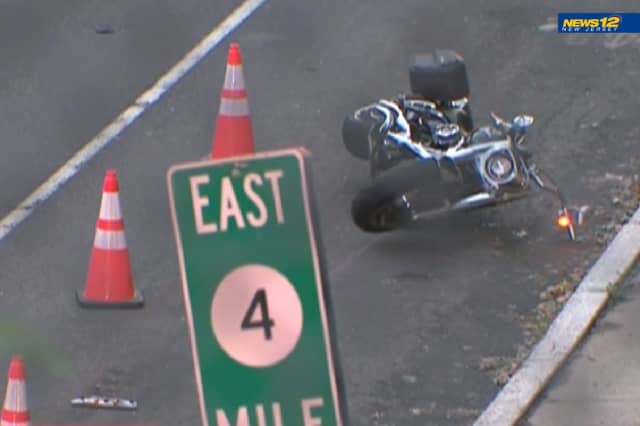
Fatal motorcycle accident on Route 4 in Teaneack

At the scene of a fatal motorcycle accident on Nov 1, 2021. Photo credit: News12 New Jersey

This morning on my way to work I noticed something rather strange. There was no traffic heading east on Route 4 in Teaneck, NJ. It did not take much knowledge or wisdom to figure out something terrible was ahead of me headed west on Route 4 toward River Edge and Hackensack, especially when I noticed the flashing emergency lights of the police ahead of me near Teaneck High on Queen Anne Road. Preliminary reports are that the biker lost his life when he collided with a deer on the roadway.

Being a New Jersey injury lawyer, who has represented many clients and family members suffering from a loss, my heart goes out to the families, with my sincerest condolences. The one thing I learned as a motorcycle rider and motorcycle accident lawyer is that until a motorcycle collision is fully investigated, no one should jump to the conclusion that it was the fault of the motorcycle rider.

As I passed the accident scene, I initially observed the lights of a flatbed truck and some law enforcement vans. The Bergen County Police, and the Teaneck Police investigators were on the crash scene. Also present at every fatal accident, is the Bergen County prosecutor’s office fatal accident squad which consists of a team of highly trained accident reconstruction experts. My observation was that there were at least 10 other police cars, vans, and county trucks at the accident scene. The fatal accident unit carefully examines the scene for skid marks, and roadway marks from the gear, brake, or motorcycle handlebars. Drivers and witnesses are sequestered at the accident scene and questioned. Electronic digital surveying equipment carefully collects information using lasers to eventually map out the accident scene.

Whenever a death occurs on a New Jersey roadway it always results in a criminal investigation. The result is an ongoing criminal investigation causing no information to be released to anyone by the county prosecutor until they concluded their investigation and issued their official police report. Some information may be released to family members through county victim assistance programs. This often frustrates the family who desperately desires and wants details about their tragic loss.

What could the Bergen County Fatal Accident unit learn and find out about a motor vehicle accident with a deer? For one thing, there may have been another driver on the roadway that took action to avoid the deer cutting off the motorcycle rider or blocking his view of the roadway. Perhaps another driver hit the deer, and it was already lying on the roadway when the motorcyclist struck it. Could there be a monetary settlement from of a “freak accident” for the motorcyclist’s next of kin under those circumstances?

The answer is that a settlement could be quite possible. The deer is not capable of being found negligent. So, drivers of a car that collided with an animal, no matter how bad the accident, are not entitled to any settlement other than their medical bills, and lost wages under their auto Personal Injury Protection (PIP) policy. But what happens in the case of a deer caucus lying on the roadway, and another driver leaving the scene or another car that cut off the biker? Under those circumstances, the motorcyclist or a passenger on a motorcycle may be able to collect under their own auto insurance policy through its uninsured and underinsured motorist coverage. However, to prove that, may require a careful and skillful accident scene reconstruction.

Often, no criminal charges are filed, and the family seeks answers and justice by bringing a lawsuit by suing in the “Civil Division” of the court system. A skilled lawyer will immediately take action to preserve evidence, which may include the motorcycle’s maintenance records. He or she will contact the Prosecutor’s office to try to get some basic information so that the private lawyer’s firm will begin its investigation. Often, this will require a Superior Court Judge’s court order to provide information to the family’s lawyer so long as it does not compromise and ongoing investigation.

The finding of the prosecutor resulting in no indictment or criminal charges should never be interpreted that there was no other driver’s fault causing this wrongful death. That is because to obtain a criminal conviction the evidence must be “beyond a reasonable doubt.” To win compensation, or money, in a civil court the standard of proof is a preponderance of evidence meaning it was more likely than not that the biker was injured because of someone else’s negligence.

As drivers, we have seen motorcyclists speed, drive between lanes, pass on the right, and engage in other dangerous and reckless conduct. Yet, the truth is that most motorcycle operators are extremely cautious and responsible riders. People refer to motorcycle collisions or crashes as “accidents.” Often, they are not accidents but in reality, are needless deaths and injuries caused by car and truck driver negligence.

Motorcyclists most often ride with caution but are nevertheless blamed for their harm. Non-riders and even jurors seem to feel that motorcycle enthusiasts assume the risk of injury when they decide to ride a motorcycle or scooter. That is simply untrue. So long as the motorcyclist obeys the motor vehicle laws, he or she is entitled to the exact same protection and justice as anyone else sharing the roadways. Think about it. Shouldn’t pedestrians, bicycle riders, mothers and fathers pushing baby carriages, skateboarders, and others sharing or crossing the road be entitled to safety?

Not a Standalone Motorcycle “Accident”

One such motorcycle crash case illustrates how wrong it is to jump to a conclusion blaming the biker. Several years back, I received a call about a man in his early 50s who was driving through an intersection when he was hit by an ambulance with its sirens and lights activated. Fortunately, the motorcycle rider survived but with many broken bones and a mild traumatic brain injury. Our law firm accepted his case and believed in our client’s version about how the accident happened. Our internal motorcycle collision practice group carefully investigated the accident and concluded that the ambulance driver acted negligently as he approached the intersection by failing to observe the approaching motorcycle. After several years of investigations and litigation the ambulance owners admitted fault for cutting the biker off and accepted responsibility by paying him millions of dollars as part of a pre-trial settlement.

In another case, a Harley rider crashed into the back of a bus causing him to almost lose his leg and suffer neck and back injuries ending his career as a construction worker. The bus driver was proven negligent by failing to notice the approaching motorcycle. His assumption that the motorcycle was going to yield to the bus is what caused the bus to cut off the biker.

The Davis, Saperstein & Salomon P.C. clients, represent by Garry Salomon, Adam Lederman, and Manuel Sameiro and were able to win a settlement of several millions of dollars for each injured motorcycle rider.

Fair settlements do not restore life or heal injuries. What a settlement does is recognize a loss with money, as deserved compensation for the harms and losses suffered by an injured person or their survivors in the hope of providing closure and justice to the accident victim. Hundreds of years ago, families had to resort to an “eye for an eye” self-help remedies that too often included violence to extract revenge and closure.

In modern times, we have our courts to resolve disputes civilly between a plaintiff and defendant using money as a common denominator. And that’s why it’s called the “Civil Justice System. “

For more information about the civil justice tort system, contact Garry R. Salomon, certified as a civil trial attorney by the Supreme Court of New Jersey, partner in Davis, Saperstein & Salomon P.C, Teaneck, New Jersey, and head of the firms’ motorcycle litigation practice group.

The post Motorcycle Rider vs. Deer in Teaneck appeared first on .


from Davis, Saperstein & Salomon, P.C. https://www.dsslaw.com/blog/motorcycle-rider-vs-deer-in-teaneck/
via https://www.dsslaw.com

How Traumatic Brain Injuries Could Impact Your Child’s Future

Traumatic brain injury (TBI) is a leading cause of death and disability among children in New Jersey and throughout the country.

As the U.S. Centers for Disease Control and Prevention (CDC) reports, the rate of emergency room TBI-related visits is higher among children than among any other age group.

A traumatic brain injury can immediately affect a child’s cognition, which may be accompanied by a variety of physical side effects, too. However, the most alarming aspect of child brain injuries is the long-term impact.

Common Types of Childhood Head Injuries

Common Types of Childhood Head Injuries

Children are curious creatures. They may get themselves into potentially dangerous situations that result in a head injury.

However, not all brain injuries are the child’s fault. In some cases, a child may incur a head injury because of the negligence of an adult.

Some common causes of childhood head injuries include:

  • Slip and fall accidents
  • Car accidents
  • Unintentional blunt trauma, such as being hit by an object
  • Assault
  • Sports-related injuries, including concussions that coaches and athletic trainers mismanage.
  • Abuse

Around 475,00 U.S. children between the ages of 0 to 14 suffer traumatic brain injuries annually, according to an article in the journal Neurologia Medico-Chirurgica. Falls, abuse, and motor vehicle accidents were the leading causes of TBIs in children four and under. For children aged 4 to 8, falls and car accidents remained the top causes of traumatic brain injury, but other “transportation-related accidents,” such as bicycle crashes, are other top causes of pediatric TBIs.

Hospitalization is most common among adolescents, with car crashes serving as the most common cause of TBIs in teenagers.

When a child is involved in any of the accidents listed above, they may sustain the following types of brain injuries:

  • Concussion (one of the most common brain injury types)
  • Contusion (bleeding on the brain)
  • Coup-contrecoup (an injury on both sides of the brain)
  • Diffuse axonal (typically caused by shaking or forceful rotation)
  • Penetration (where an object breaks through the skull).

Brain Injury During Childhood Can Affect a Person for Life

A brain injury can affect an individual’s life and health in three primary ways:

  • Cognitive deficits – One of the most devastating consequences of TBI is related to a child’s ability to think, remember information, learn, speak and communicate, write and read, reason, and understand information. The injury can present a serious learning disability that sets a child back for years to come.
  • Physical deficits – In addition to trouble with cognition, it is not uncommon for traumatic brain injuries in children to have a physical effect as well. Common physical deficits that a child may experience are problems with motor control, visual impairment, and problems with balance and coordination.
  • Emotional deficits – Because of their underdeveloped brains, children often struggle with managing their emotions and understanding social cues. These are skills that are learned with time and acquired as the brain develops and matures. A TBI cannot only halt that process but also result in emotional deficits. A child who has suffered a TBI may cry frequently, experience depression or anxiety, suffer from behavioral changes, display aggression or violence, be unable to function in social settings, act out, and struggle from other emotional setbacks.

You can read more about the impact of both mild TBI and moderate to severe TBI on the CDC’s website.

What Are the Long-Term Effects of a Child Head Injury?

What Are the Long-Term Effects of a Child Head Injury?Time magazine reports that “the effects [of a brain injury] may be longer-lasting than researchers thought,” particularly in younger children who suffer from TBI.

The magazine reports on a study in which researchers followed 40 children, all of whom had suffered a brain injury between the ages of 2 to 7.

Most of the injuries were caused by a car accident or a fall. Those children with the most severe brain injuries showed the most severe deficits throughout the study.

The deficits researchers most commonly observed included difficulties in higher learning capabilities such as:

  • Planning
  • Reasoning
  • Organization

The researchers also found how regions of the brain which control the higher learning skills are also the parts that develop fastest in life. Thus, any disturbance to normal growth in these regions can have a lasting effect on a child.

Because a child’s brain is still developing, a brain injury may be more devastating for the child compared to an adult. As such, brain development tends to lag after a brain injury rather than developing at the same pace it would have experienced before the injury.

While a child’s brain will continue developing in most cases following a brain injury, the brain cannot recover completely, the study found.

It is important to note that this research pertains to children with serious traumatic brain injury. Children who have suffered minor brain injuries such as mild concussions will likely not be as seriously affected.

Recovering Compensation for Your Family

If your child has suffered a brain injury, they must get the medical care needed to reduce the chances of long-term impairment. This may include working with therapists and specialists who can provide professional, supportive care.

In addition to medical and therapy bills that your family has incurred, your child may require extra tutoring to get caught up in school. The child may also suffer from a diminished quality of life because they cannot do the things they once loved, such as playing a favorite sport, engaging in a hobby, or socializing with others.

At the Davis, Saperstein & Salomon, our highly skilled traumatic brain injury attorneys can help your family pursue damages for your losses if your child suffered injuries due to someone else’s negligence.

Please use our online contact form to schedule a free case review with our experienced brain injury lawyers today. We serve clients throughout New Jersey and New York.

This post was originally published in November 2016 and has been updated for accuracy and comprehensiveness in November 2021.

The post How Traumatic Brain Injuries Could Impact Your Child’s Future appeared first on .


from Davis, Saperstein & Salomon, P.C. https://www.dsslaw.com/blog/how-traumatic-brain-injuries-could-impact-your-childs-future/
via https://www.dsslaw.com