Tuesday, September 15, 2020

Governor Murphy Signs Legislation to Protect Essential Workers

On Monday, September 14, Governor Phil Murphy signed into law a bill that would make it substantially easier for essential workers who contracted Covid-19 to collect workers’ compensation benefits.  The law effectively changes the burden of proof for an essential worker to show that he or she contracted the coronavirus at work.

Ordinarily, an injured worker in New Jersey bears the burden of proof to establish that their illness was due to an exposure which occurred at work.  However, under the new law, an essential worker is presumed to have contracted the coronavirus at work.  The burden then shifts to the employer to prove that the worker did not get ill due to exposure at work.

The bill states that those who are covered are workers who provide necessary and vital services to the public. It was sponsored by Assembly Democrats Thomas Giblin, John Burzichelli, Carol Murphy, and Joann Downey. “These dedicated workers have heroically stepped up and put their health on the line in order to help their fellow community members get through this unprecedented crisis,” said Thomas Giblin.

New Jersey has been hit exceptionally hard during the outbreak. At the peak of the crisis in early spring, hospitals around the state ran dangerously low on personal protective equipment, or PPE, and even resorted to reusing N-95 masks. On April 14, the state saw a peak of 8,065 hospitalizations due to the virus. Holy Name Hospital in Teaneck was at the epicenter of the pandemic, and in order to make room for incoming coronavirus patients, they were forced to convert the whole hospital into intensive care units, including using outdoor tents to fit patients.

Not surprisingly, the overwhelming number of cases took its toll on healthcare workers, including doctors, nurses, and first responders, many of whom became ill themselves.  This new law signed by Governor Murphy will provide benefits to those individuals and many other workers deemed essential under the law.

Steve Cohen, Esq., Chairman of Davis, Saperstein & Salomon, P.C.’s Workers Compensation Department, has decades of experience helping individuals who have been injured or have become ill while on the job. The New Jersey Workers’ Compensation Act provides for related medical treatment to the injured worker, money while they cannot work due to the illness or injury and an award of money for the injured workers’ permanent injury.

To learn more about workers’ compensation, please contact Steven Cohen at 201-444-4444, ex. 1473, or email steven.cohen@dsslaw.com.

The post Governor Murphy Signs Legislation to Protect Essential Workers appeared first on .


from Davis, Saperstein & Salomon, P.C. https://www.dsslaw.com/blog/protecting-essential-workers/
via https://www.dsslaw.com

Thursday, September 3, 2020

New Jersey Nursing Home Abuse & Neglect Shockingly High

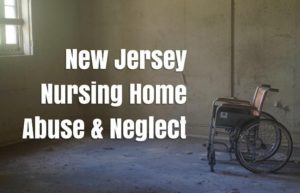
Elderly abuse is a shockingly common occurrence throughout the United States, with much of this abuse occurring within the walls of nursing homes – a place where the most vulnerable go in a time of need. How common are cases of abuse and neglect in nursing homes in New Jersey? According to a new report, it is exorbitantly high.A Wheelchair in an empty room with nursing home related text

When a loved one is moved into a nursing home, it often signifies the end of a person’s independence and ability to care for themselves. Families expect nursing home aides and staff to have the residents’ best interests as heart and to provide quality medical care with compassion and kindness.

On August 20, 2020, the US Department of Health and Human Services’ Office of the Inspector General released a report stating that nursing homes throughout New Jersey have not been following proper protocol in reporting cases of abuse and neglect.

The information in the 2016 report, gathered from 4,402 hospital claims that were paid by Medicaid, revealed that:

311 Medicaid hospital claims represented incidents of potential abuse or neglect

220 claims were the result of potential abuse or neglect that nursing facilities did not investigate and report to the state Health Department

Conclusions could not be drawn with 616 claims because nursing homes did not provide sufficient documentation

General neglect is a huge concern for residents and their families. A notorious sign of nursing home abuse and neglect are bedsores, which form when too much pressure is pushed on one side of the body. This usually occurs in the elderly and those who are bedridden. It is the responsibility of the nursing home aides and staff to make sure the patient changes position several times a day. If left untreated, bedsores become open wounds and can lead to infection throughout the body and even cause death. Some of the worst cases of bedsores have spread into the patient’s bones. According to the newly released report, one of the most common injuries that led to patients being hospitalized was “stage 4” bedsores. Others included injuries from falling and sepsis.

The report also found that one in four New Jersey nursing homes were short staffed, which could be a major factor in the lack of reporting medical issues. State inspectors should be more vigilant of evidence and reporting of abuse and neglect, according to the Inspector General. In 2017, New Jersey enacted Peggy’s Law, which requires workers at state-regulated nursing homes to immediately report any suspected signs of abuse and neglect. The law is named for Peggy Marzolla, who, at 93, succumbed to injuries she sustained while living in a Brick, New Jersey nursing home, including broken cheekbones, a broken eye socket, and more.

Every nursing home resident and their family have the right to seek justice if any harm is brought upon them while under someone else’s care. Anyone – including family members, friends, patient advocates, nurses and so on – can file an elder abuse complaint in New Jersey. If a person has been injured, the Statute of Limitations to file is two years from the injury date. However, under certain strict rules, this limit can be extended under the “discovery rule.” It is important to know that if the abuse took place in a state facility, there is a 90-day notice required under New Jersey’s Tort Claims Act. The attorneys at Davis, Saperstein & Salomon P.C. are highly experienced with all types of personal injury cases, including nursing home abuse cases. For a free consultation, call 201-444-4444.

The post New Jersey Nursing Home Abuse & Neglect Shockingly High appeared first on .


from Davis, Saperstein & Salomon, P.C. https://www.dsslaw.com/blog/nursing-home-abuse-neglect/
via https://www.dsslaw.com